
 Have you ever wondered why baptism and communion are celebrated during Easter? Easter celebrates the resurrection of Jesus Christ on the third day after his crucifixion, his conquering of death and redemption of mankind from sin. Both baptism and communion are symbolic of the resurrection through identification with Jesus, a time for renewal of faith and embracing new life, and a celebration of both personal and communal commitment to faith.
Baptism
Baptism is initiation into the church and a public declaration of faith and commitment to Jesus. It represents forgiveness of sins through a covenant with Jesus and a willingness to follow Jesus’ teachings and example. It is also a personal connection to the death, burial, resurrection and eternal lift of Jesus Christ – with waiting to be baptized symbolizing his death on the cross, being lowered into or sprinkled with the water symbolizing his burial, and being raised from the water, symbolizing his rising from the dead.
Communion
The act of communion is a symbol of resurrection with the bread and wine signifying the body and blood of Jesus, broken and poured for humanity’s salvation. Christians celebrate the resurrection of Jesus and their own hope for eternal life received through faith. It is a shared experience that unites believers, emphasizing community within their faith. It invites Christians to reflect on their own spiritual journey, the need for grace and the power of Jesus’ sacrifice.
Whatever your beliefs may be, spring is a time for renewal, reflection and rebirth. Bridgewaters loves to be part of your celebrations – stop in and let us help you find just the perfect jewelry to mark this special time of year.
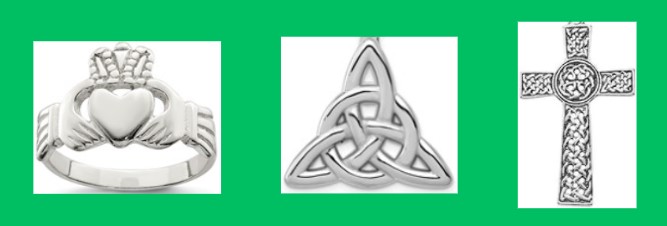 March 17 has become synonymous with green, corned beef and cabbage, and beer, but where do these traditions come from? St. Patrick’s Day honors Ireland’s patron saint, St. Patrick and is observed on the anniversary of his death in the 5th century. St. Patrick, born in Britain during Roman times, was kidnapped and brought to Ireland as a slave at 16 years old. After six years in slavery, he escaped to what is now France and trained as a priest. He returned to Ireland where he is credited with converting the Irish to Christianity, creating churches and using the shamrock to explain the Holy Trinity.