
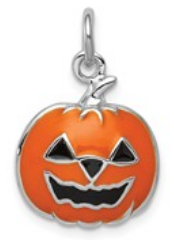
 Better known to us as Halloween, All Hallows Eve dates back to the day of the Celtic festival of Samhain. The day marked the end of summer and the harvest and the beginning of the winter which was associated with death. They believed that the boundary between the worlds of the living and the dead became blurred on this day and the ghosts of the dead returned to earth. The Celts built large bonfires and wore costumes to ward off the ghosts.
In the 9th century the Catholic church made November 2 All Soul’s Day to honor the dead. It was celebrated similarly to Samhain with bonfires, costumes and parades. The celebration was also called All-hallows and the night before All-Hallows Eve which eventually became Halloween.
In the United States, during colonial times, this time was a celebration of the harvest and featured stories of the dead, dancing and singing and mischief making. It wasn’t until the second half of the 19th century that Halloween was popularized around the whole country.
Do you have special jewelry you like to wear to celebrate Halloween or fall? Share on our Facebook page!
 While there are many styles of jewelry, we’ll focus on four – Vintage, Classic, Modern and Artisan.
 A very popular symbol in jewelry, the Yin Yang which dates back to ancient China, represents the idea that an equal balance creates harmony. The two opposite characteristics, the Yin represented in black as the feminine side and Yang represented in white as the masculine side, complement each other and represent the interconnectedness of the world, in particular, the natural world. There are no straight lines dividing the symbol, but a soft S-shape, showing how yin and yang are connected and constantly flowing in and out of each other. The small circle of the other color within shows that nothing is absolute – there is a little yin in yang and vice versa. The circle which surrounds the elements represents the entirety of the universe, everything we know and all the things we don’t understand.
 Those born in October have both a modern and traditional birthstone. October features both opals (traditional) as well as pink tourmaline (modern).