
May the Luck of the Irish be with You!
 March 17 has become synonymous with green, corned beef and cabbage, and beer, but where do these traditions come from? St. Patrick’s Day honors Ireland’s patron saint, St. Patrick and is observed on the anniversary of his death in the 5th century. St. Patrick, born in Britain during Roman times, was kidnapped and brought to Ireland as a slave at 16 years old. After six years in slavery, he escaped to what is now France and trained as a priest. He returned to Ireland where he is credited with converting the Irish to Christianity, creating churches and using the shamrock to explain the Holy Trinity.
Observance of St. Patrick’s Day began in Ireland in the 9th or 10th century as a Roman Catholic feast day. The more secular holiday we know in America began in the 17th century with parades, corned beef and cabbage and the wearing of green.
In addition to St. Patrick’s Day, there are many symbols that have become synonymous with Ireland and Irish cultural heritage.
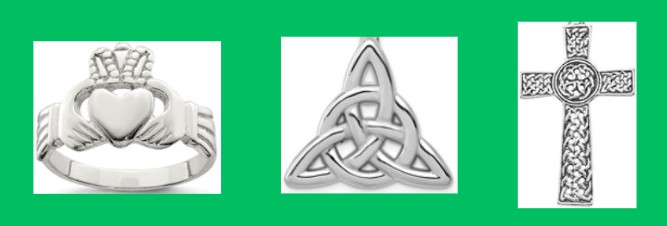
- The Claddagh Ring, traditionally associated with marriage, has a heart representing love, the hands friendship and the crown loyalty and can be worn to reveal a relationship status.
- The Celtic Cross or Irish Cross is a Christian symbol associated with Celtic Christianity. The four arms may signify the directions of a compass with a halo, representing unity at the junction.
- The Triquetra or Trinity Knot has many interpretations of its meaning, all of which include three entities in one symbol and is why it is likely to have been adopted as a Christian symbol.
Stop in to Bridgewaters to check out these Irish symbols and find the one that suits you!