Egyptian Jewelry: Symbolism and Beauty Combined
 We’ve all seen the stunning beauty of the death mask of Tutankhamun, but what did ordinary Egyptians wear? Jewelry in ancient Egypt was worn by all social classes, genders and ages. It was both about fashion as well as a way for spiritual protection. Jewelry appears in the Egyptian archaeological record as early as 4500 BC, featuring beads made of shells and stones. Jewelry was part of everyday life as well as the afterlife.
Specific materials and symbols provided the wearer divine favor, good fortune and warding from evil.
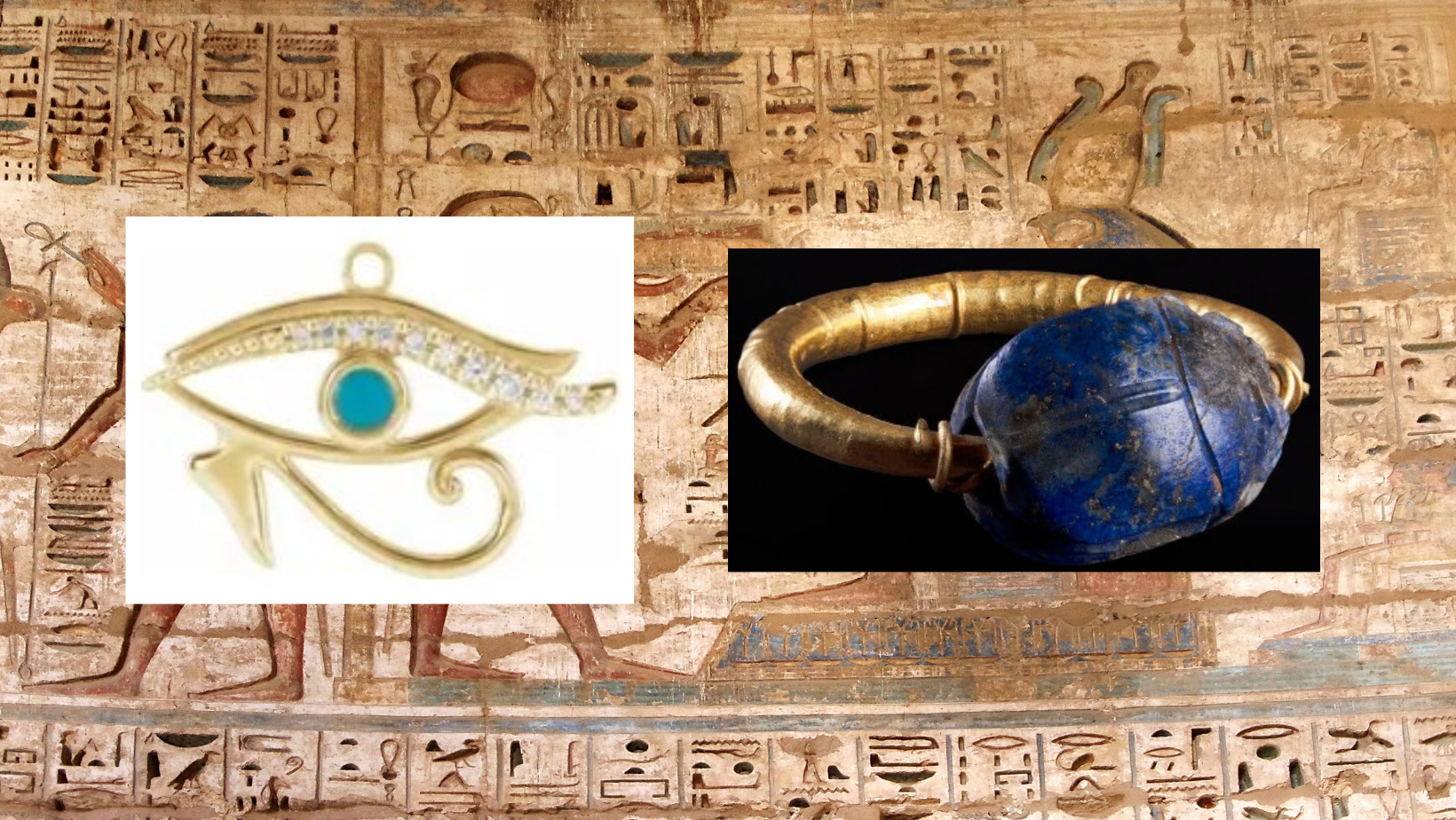
- Amulets were believed to hold magical powers to provide luck or protection. Scarab beetles were very popular as a symbol of rebirth and regeneration. Amulets were featured on necklaces and bracelets with symbols like the scarab, the Ahkh (symbol of life) or the Eye of Horus (symbol of protection and healing). Amulets were worn in life and incorporated into burial.
- Materials included both gold and silver and many of the same precious and semi-precious stones we wear today, including turquoise, lapis lazuli, and amethyst. Other materials included stones, glass, marble, bone, shells and more. Fun facts about gold and silver – gold was considered the flesh of the gods, representing eternity and the sun while, during certain time periods, silver was considered more rare and valuable than gold.
- Your class determined the type of materials that would be used in your jewelry. The wealthy would use precious gems while commoners used less expensive materials like painted clay, shells, and bone.
- Jewelry was an integral part of the belief in the afterlife. It was considered a tool to guide, protect and sustain the soul (the ka) in the journey through the underworld to the afterlife. Mummies of all rank were buried with amulets, rings, collars and more to help the on their way.
Egyptian jewelry is beautiful and fascinating. Stop by Bridgewaters to find a symbol that connects with your life and beliefs.