
 Did you know that 40% of engagements happen between Thanksgiving and Valentine’s Day? December is the peak month with Christmas Eve as one of the most popular days. So you might be thinking of getting engaged this coming fall/winter, but you are not sure how to find your partner’s ring size without giving away the surprise. We are here to help with great ideas for getting that ring size!
- Does your partner have a ring they regularly wear on their left hand, ring finger? If yes, see if you can borrow it for a quick visit to your favorite jeweler for sizing. Can’t borrow it long enough to get to the jeweler? Try placing the ring on a piece of paper and tracing around the middle (ie, inside). Note that this is not the most accurate way to get the size, but a good jeweler should be able to help.
- Connect with your partner’s family and friends. Maybe they have purchased a ring for her or your partner has tried on one of their rings. This will only get you a pretty good idea of the ring size though. And, most importantly, you need to be able to trust their family and friends not to spill the beans!
- Another way to enlist your partner’s friends is to have them try to find out the ring size. Best case scenario, your partner has a friend recently engaged who could let them try the ring on and the friend can ask the ring size. Just be sure to find a friend who can be subtle, bluntly asking might get you the right size, but might also give away your secret!
- Depending on your own level of smoothness and creativity, you could try to sneak it into conversation. You could ask her ring size as you plan to buy a ring for your mom, sister, etc. and want to have an idea of what size to get. Or if your friends are getting married, you could casually ask how the ring size was determined in their case and maybe your partner will share their size as part of her answer.
- Finally, you could just ask. Many couples today are less secretive about proposals or have conversations about marriage as part of the relationship. So…just ask! In addition to getting the correct ring size, you may also be able to get a sense of the style of ring they prefer. The actual proposal can still be a secret.
If you are ready to propose, Bridgewaters is here to help! We can help you find the perfect style, the right diamond or other gem and help keep you on budget. Stop in to see us!
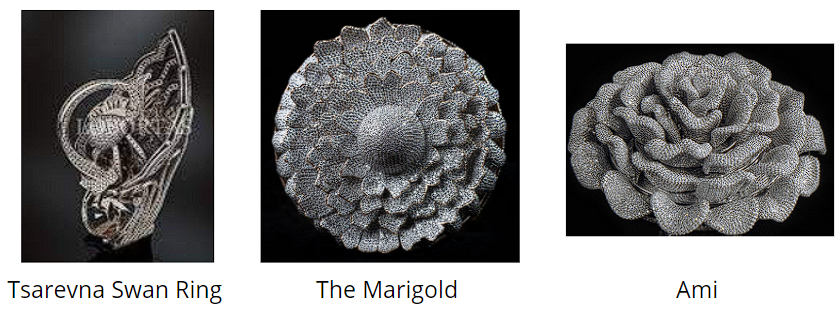 Have you ever wondered who holds the Guinness Book of World Records for the most diamonds set in one ring? Well, lately you would have to have been keeping up with the news pretty often to know! Back in 2019, the Lobortas Classic Jewelry House, a Ukrainian jewelry company, held the record with the Tsarevna Swan Ring. A total of 2,525 diamonds weighing 10.48 carats are set on the 18k white gold ring and it’s estimated worth was $1.3M.
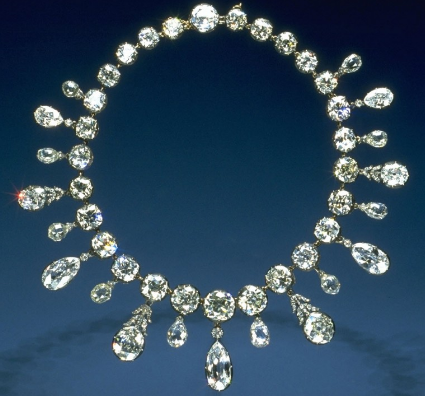 Famous jewels and jewelry often seem to have an illustrious past and the Napoleon Diamond Necklace is no different! The necklace, set with 234 diamonds with an overall weight of approximately 263 carats, was a gift from Napoleon Bonaparte to his second wife, Marie-Louise of the Austrian House of Hapsburg, Empress of France, upon the birth of their son Napoleon II.
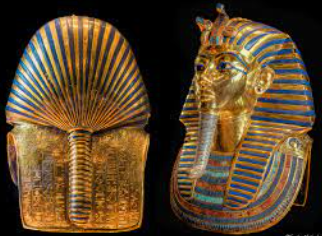 In many of our previous blogs, we have spoken of Egypt and its use of gold and gems. Egyptians were the first to have organized production of jewelry and their work in advancement of metallurgy and collection of gems impacted jewelry development in every civilization that came after.
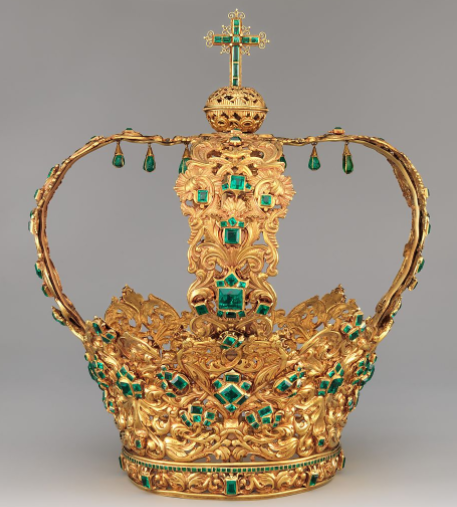 Since we are celebrating the birthstone of May, the emerald, it seems fitting to share information on the Crown of the Andes that includes nearly 450 emeralds, including one known as the “Atahualpa Emerald” which is twenty-four-carats. The Crown is one of the most important examples of colonial Spanish American gold work, crafted in the 1600s. Legend say the Atahualpa Emerald was taken from the last Inca emperor, Atahualpa.
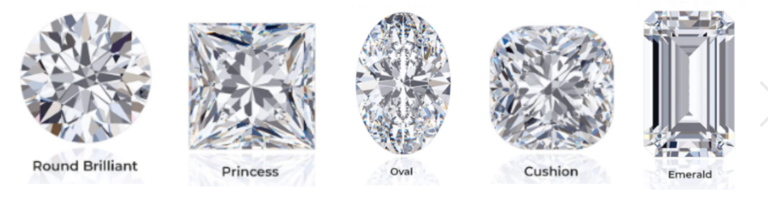 In addition to considering color, clarity and carat weight, you will need to determine the type of cut that suits you best. Cut is often thought of as shape, but a diamond’s cut is about how well a diamond’s facets interact with light. We’ve reviewed cut (see our blog from December 14, 2021 for more details on the 4Cs) so today we’ll look at the different shapes.
 Purchasing a diamond or considering selling one is a big and seemingly overwhelming process. There are two parts to determining the value of your diamond – an appraisal and a certification.
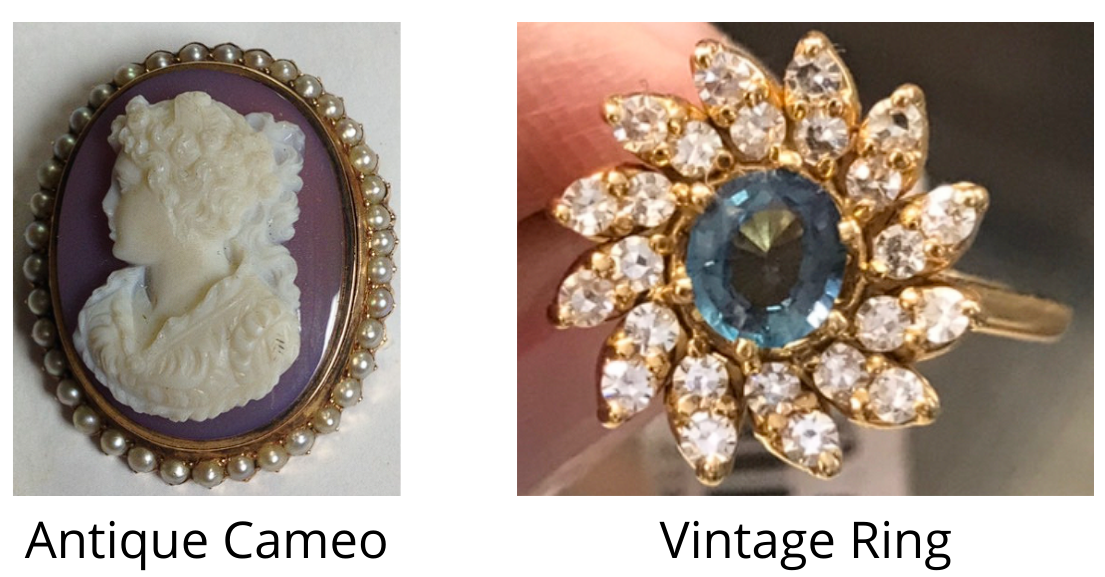 Despite the prolific use of the terms antique and vintage, in the jewelry trade, they do have specific meanings. This is good news for those interested in truly antique or vintage pieces as it eliminates confusion around modern reproductions of jewelry from specific eras. Often reproductions are poor quality and fail to employ the techniques and materials used during the time period in question. Let’s explore the meaning of the terms antique and vintage.
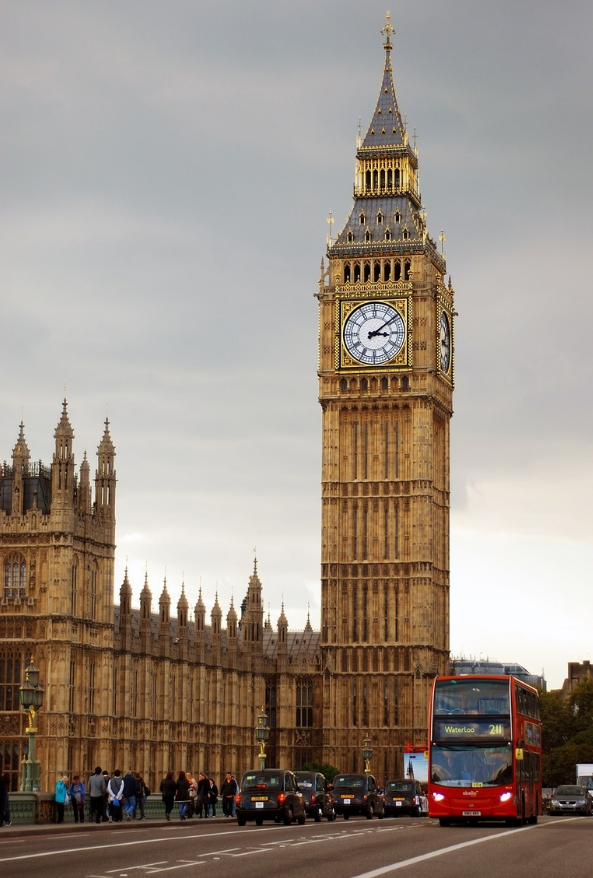 One of the most Instragrammed sites in the world, Big Ben is the clock tower that was built as part of the Houses of Parliament in 1844 after a fire destroyed much of the Palace of Westminster in 1834. Big Ben first rang on May 31, 1859 and is famous for its accuracy and its massive bell. The name Big Ben actually refers to the great hour bell, which weighs more than 13 tons, but the entire clock tower has been associated with the name. The tower itself was named St. Stephen’s Tower until 2012 when it was renamed Elizabeth Tower at the celebration of Elizabeth II’s Diamond Jubilee, celebrating 60 years on the throne.
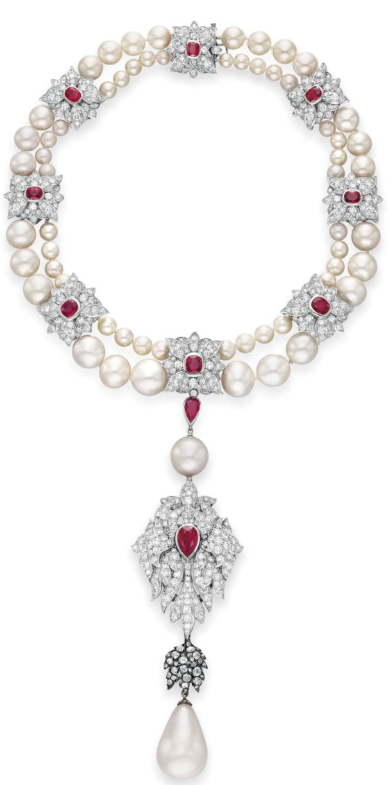 Discovered in the mid 16th century, La Peregrina Pearl is one of the most symmetrical natural pearls ever discovered. It was discovered in Panama and turned over to Don Pedro de Temez, the administrator of the Panama colony. Temez carried the pearl back to his Spanish homeland where he gifted it to the future king, Phillip II who gave it as a bridal gift to Queen Mary I of England. When Mary died, Queen Elizabeth I returned it to Spain where it remained one of the crown jewels for more than 250 years.